How digital marketing is different from traditional marketing?
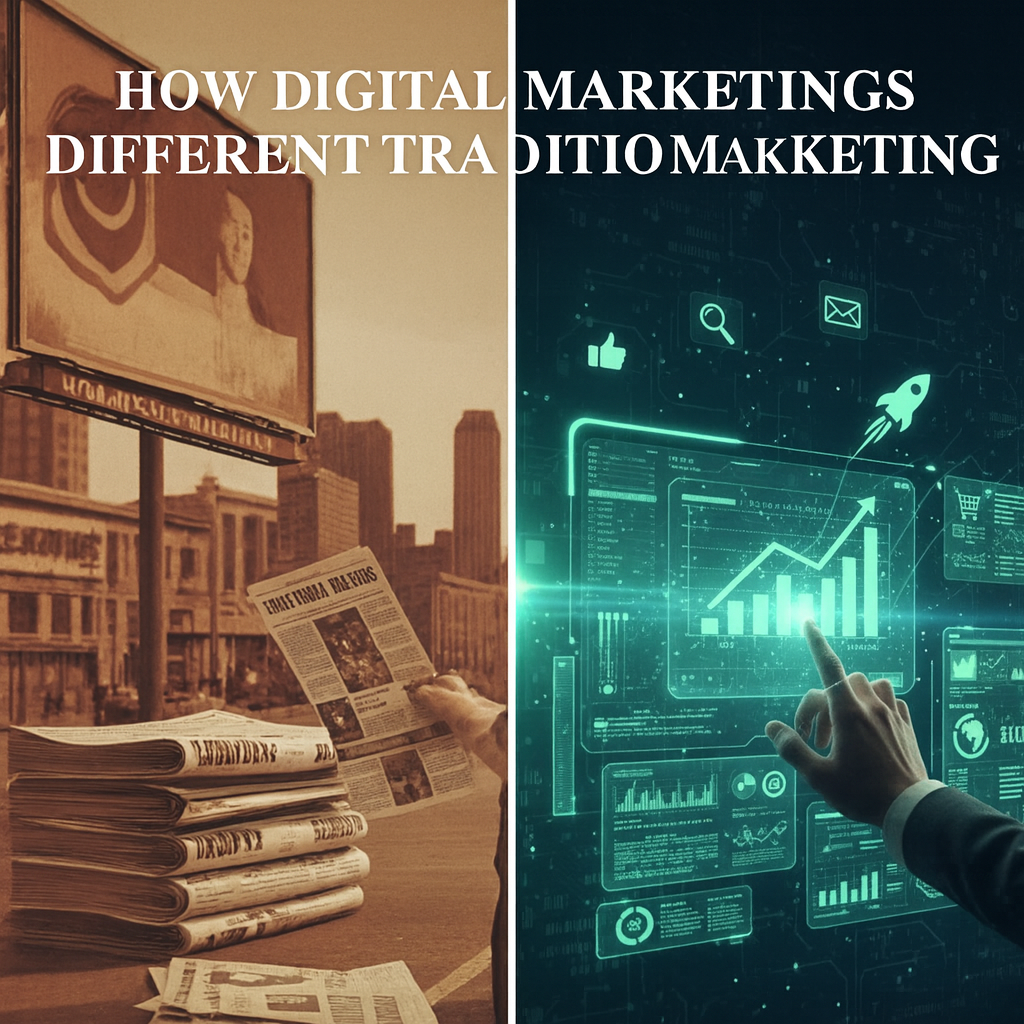
Marketing has evolved significantly over the past few decades. From billboards and newspaper ads to social media campaigns and Google searches, the ways businesses reach their audience have changed a lot. This change has led to the rise of digital marketing, which has transformed the marketing landscape. But how exactly is digital marketing different from traditional marketing? Let’s find out.
Understanding Traditional Marketing
Traditional marketing refers to the methods businesses have used for a long time to promote their products or services.
These include:
Print Media: Newspapers, magazines, brochures, and flyers
Broadcast Media: Television and radio commercials
Outdoor Advertising: Billboards, posters, and banners
Direct Mail: Catalogs, letters, and postcards
Traditional marketing usually involves one-way communication.
The brand sends out a message, and the audience receives it. Although it can help create brand awareness, it often lacks direct interaction with potential customers.
Understanding Digital Marketing
Digital marketing, on the other hand, involves using online platforms to promote products or services.
It includes tools like:
Search Engines: Google, Bing, etc., for SEO and PPC advertising
Social Media: Facebook, Instagram, LinkedIn, TikTok, etc.
Email Marketing: Newsletters and personalized offers
Content Marketing: Blogs, videos, podcasts, and infographics
Affiliate and Influencer Marketing: Partnering with influencers to promote products
Digital marketing allows for two-way communication.
Brands can engage with their audience, get feedback, and even adjust campaigns in real-time.
Key Differences Between Digital and Traditional Marketing
Here’s a comparison that helps understand the major differences:
1.Reach and Audience Targeting
Traditional Marketing: Typically has a local or regional reach, unless you invest heavily in nationwide or international campaigns.
Audience targeting is broad. For example, a newspaper ad reaches all readers, not just potential buyers.
Digital Marketing: Offers global reach with precise targeting.
You can segment audiences by age, location, interests, behavior, and even past purchases. This ensures your marketing budget is spent reaching people most likely to convert.
2.Cost and ROI
Traditional Marketing: Often expensive.
TV ads, billboards, and print media require a large investment. Measuring ROI can be difficult since it’s hard to track who saw the ad and took action.
Digital Marketing: Usually more cost-effective, especially for small businesses.
Pay-per-click (PPC) ads, social media campaigns, and email marketing allow you to track every expense. Analytics tools give clear insights into ROI.
3.Interaction and Engagement
Traditional Marketing: Mostly one-way communication.
The audience can see or hear the message but can’t immediately respond or interact. Feedback is delayed or indirect.
Digital Marketing: Encourages real-time engagement.
Audiences can comment, share, like, or message brands directly. This two-way communication builds trust and fosters stronger customer relationships.
4.Flexibility and Adaptability
Traditional Marketing: Once an ad is printed or aired, changes are difficult or costly.
You can’t easily tweak a billboard or TV ad after it’s live.
Digital Marketing: Highly flexible.
You can modify content, test different approaches (A/B testing), and instantly optimize campaigns based on performance.
5.Measurability and Analytics
Traditional Marketing: Measuring success relies on indirect metrics like sales growth, surveys, or coupon redemptions.
It’s challenging to determine which part of a campaign drove results.
Digital Marketing: Everything is measurable.
You can track clicks, impressions, conversions, bounce rates, and customer behavior. Analytics help marketers make data-driven decisions.
6.Speed and Reach of Communication
Traditional Marketing: Campaigns take longer to execute.
Designing print ads, booking TV slots, or distributing flyers can take weeks.
Digital Marketing: Campaigns can go live instantly.
Social media posts, email campaigns, and online ads can reach thousands or millions of people within minutes.
7.Content and Creativity
Traditional Marketing: Creativity is limited by the medium.
A print ad must fit a page, and a TV ad must fit a time slot.
Digital Marketing: Offers endless creative possibilities—interactive videos, memes, GIFs, podcasts, blogs, virtual events, and more.
Digital platforms allow brands to experiment with storytelling in unique ways.
8.Longevity and Visibility
Traditional Marketing: Ads are temporary.
Newspapers get discarded, TV ads are forgotten, and billboards are seen only by passersby.
Digital Marketing: Content can remain online indefinitely.
Blogs, videos, and social media posts can continue attracting audiences for months or even years. SEO-optimized content can generate traffic long-term.
Why Businesses Are Shifting to Digital Marketing
The shift toward digital marketing isn’t just a trend—it’s driven by changing consumer behavior.
Today:
Most people research products online before making a purchase.
Social media has become a major source of influence.
Mobile usage is at an all-time high, making digital campaigns more effective.
Analytics and data-driven decisions make digital marketing more efficient.
Even big brands now allocate a significant portion of their budget to digital marketing because of its measurable results and higher engagement rates.
Can Traditional Marketing Still Work?
Yes. Traditional marketing still has its place, especially for local businesses or industries targeting older demographics. The key is integration. Many successful brands now use an omnichannel approach, combining traditional and digital marketing to reach the widest audience effectively.
For example, a retail store might run a local newspaper ad while also promoting the same products on Instagram, sending email offers, and using Google Ads to target nearby customers.
In summary, digital marketing is different from traditional marketing in almost every way—from audience targeting and cost-effectiveness to engagement, flexibility, and measurability.
While traditional marketing laid the foundation, digital marketing has revolutionized how brands connect with their audience.
The digital age favors those who can adapt, analyze, and engage with their audience online.
For businesses and marketers looking to maximize reach, efficiency, and revenue, embracing digital marketing is no longer optional—it’s essential.
While traditional marketing isn’t obsolete, the future of marketing is digital, and understanding these differences is the first step toward building a successful, modern marketing strategy.